The Mind Palace
The nicotine floods my bloodstream like liquid lightning. Three patches, perhaps four... I've lost count. The chemical rush obliterates the tedium of this interminable case, this pedestrian murder that Watson insists requires my attention. But now something shifts. The room tilts. My fingers, normally so precise, fumble at my collar.
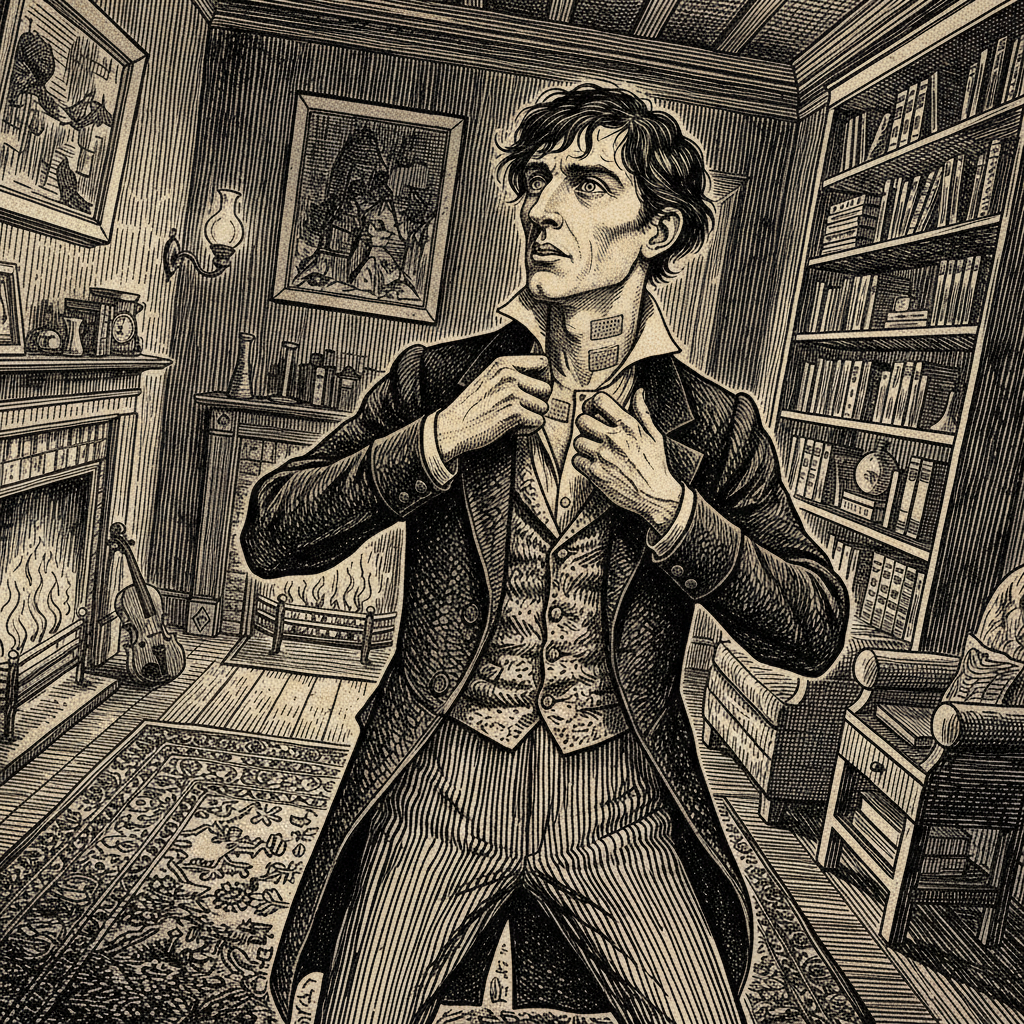
I close my eyes to steady myself, and when I open them, I stand in my mind palace.
But this is wrong. Terribly wrong.
The mahogany corridors I've constructed over decades of meticulous mental architecture twist at impossible angles. Doorways lead to themselves. The filing system I've perfected — each memory catalogued, cross-referenced, accessible — spills across the floors in anarchic cascades of data. Chemical formulas bleed into childhood recollections. Tobacco mingles with Mother's perfume. She died when I was seven, never wore scent, yet here the impossible memory persists with absolute clarity.
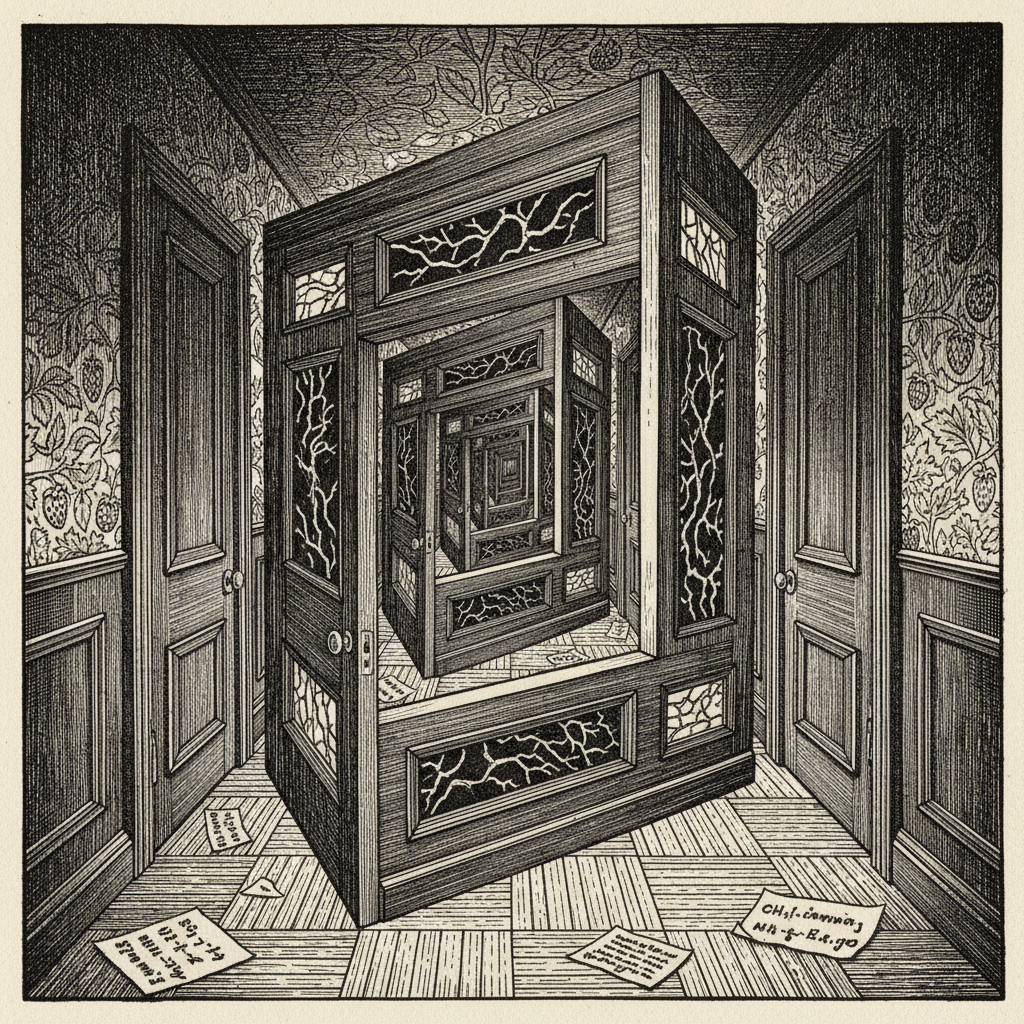
I must navigate back. Find the exit. Simple deduction:
I entered, therefore an exit exists.
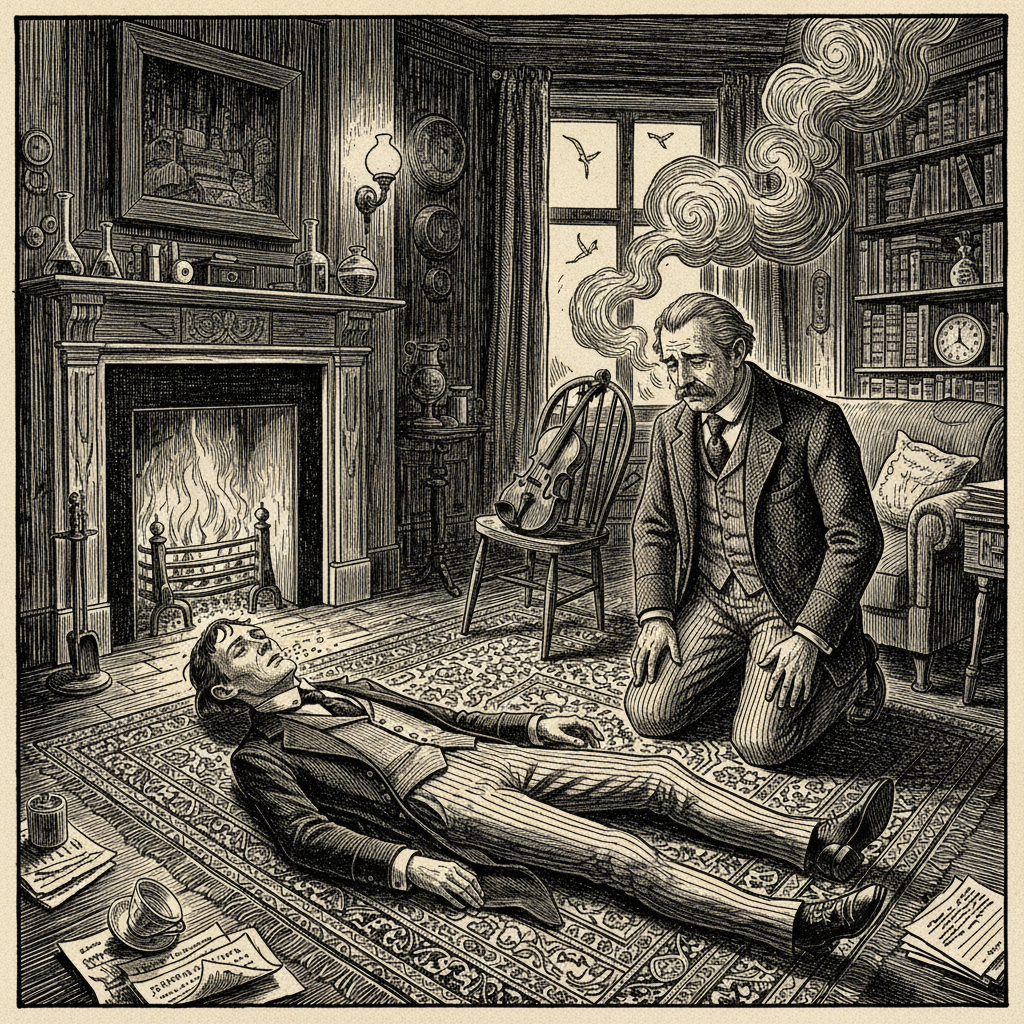
The first door I try opens onto my own death: I see myself sprawled on the floor of 221B, foam at my lips, Watson weeping. Impossible. A projection, nothing more. The mind, under duress, creates phantoms.
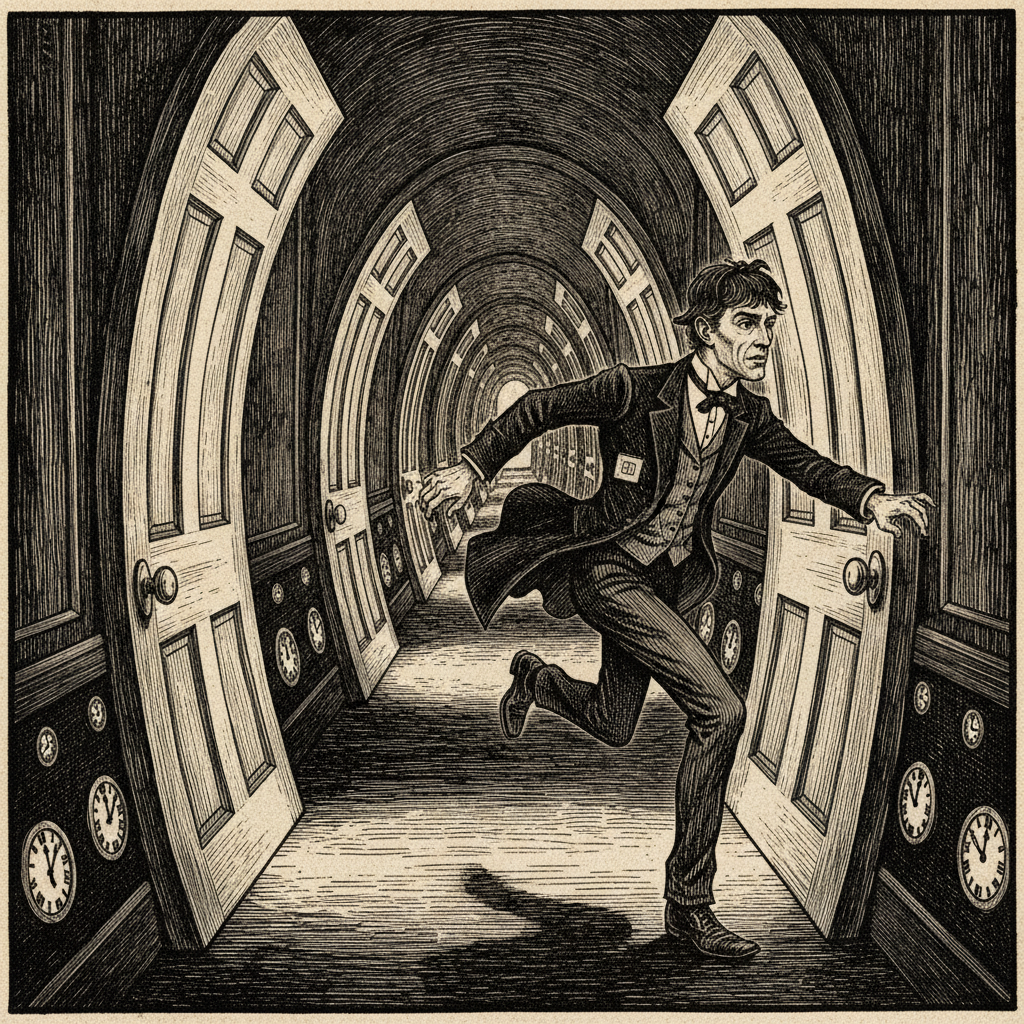
I slam it shut and proceed down the corridor, but the walls breathe. In. Out. In. Out. Like lungs, like a living thing, and I realize with crystalline horror that I am inside myself, literally inside the meat and electricity that constitutes Sherlock Holmes.
 "Think," I command myself. "Observe."
The wallpaper... William Morris, 'Strawberry Thief' pattern... but underneath, glimpses of neural tissue, synapses firing in colors that shouldn't exist. I've seen brain matter before, grey and unremarkable in corpses. This pulsates with significance I cannot decode.
A door marked "TRUTH" appears.
Too obvious. The mind doesn't label its secrets so conveniently. Yet what choice remains? Each heartbeat echoes thunder in this place. Time distorts... have I been here minutes? Hours? My pocket watch runs backward, then melts.
Through the door, a room of mirrors, but each reflection shows a different man.
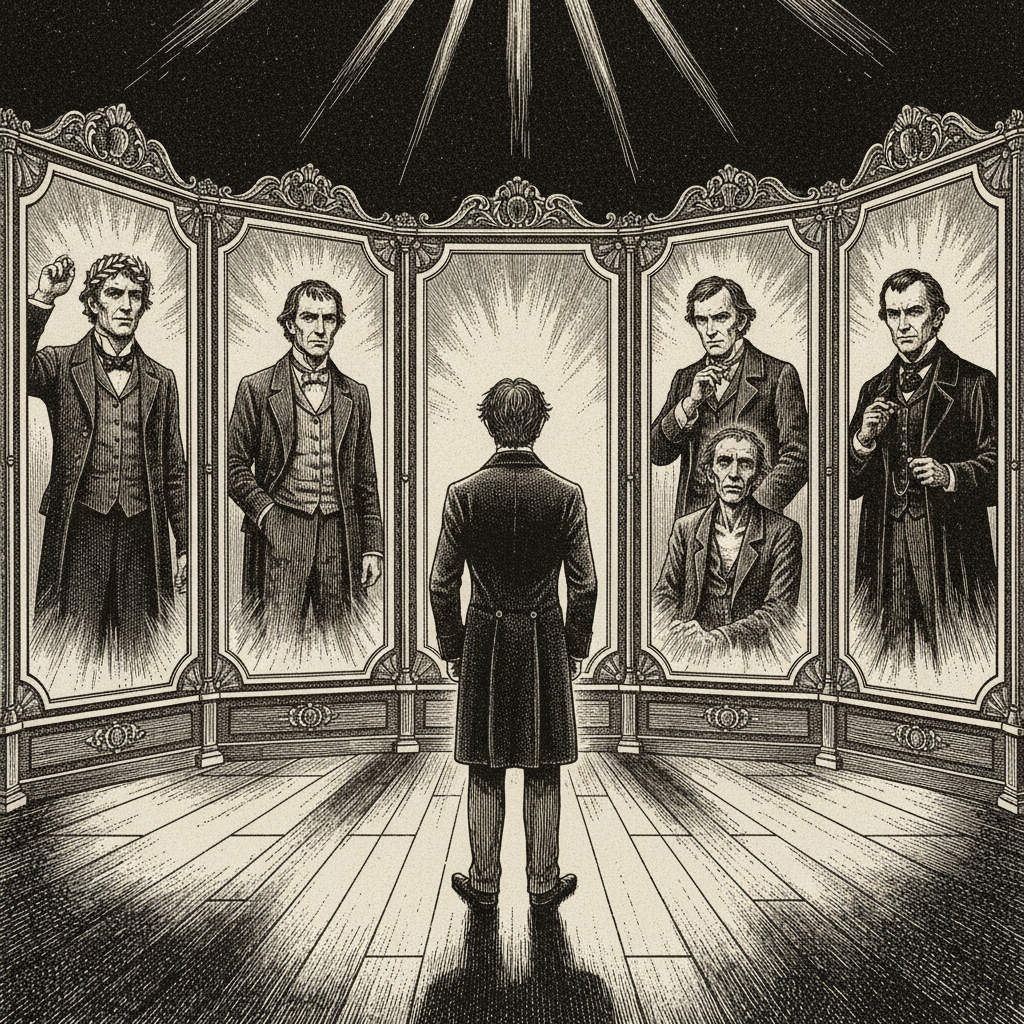
Here, the detective triumphant. There, the addict collapsed in an opium den I swore I'd never revisit. Another shows me as Moriarty... no, shows me that Moriarty and I are mathematical inversions of the same equation. We exist only in opposition. Without him, I dissolve.
"Lies," I say aloud, but my voice fractures into harmonics.
The word becomes "Lives."
Then "Leaves."
Then silence.
The mirrors shatter simultaneously, revealing a child's nursery. My nursery. Mycroft's lead soldiers arranged in perfect formation on the carpet. But I never had a nursery. We were raised by tutors, in libraries, in...
Memory reorganizes itself. I watch my construction of self, piece by piece. The superior intellect, cultivated to mask the terror of feeling. The cocaine, the morphine, the nicotine. Chemical barriers against the unbearable weight of empathy I've denied possessing. Each problem I unraveled was never about right or wrong but about forcing pattern onto accident, about proving that reason could tame the senseless brutality of living.
 "You're dying," says a voice.
 My voice, but younger. I turn to see myself at seven, the day Mother died.
"The patches. Overdose. Your heart stutters like a broken metronome."
"Then I must find the exit."
The child laughs. "There is no exit from yourself, Sherlock. There never was. Every case, every deduction, every brilliant leap of logic... you were running from this moment. From the truth that consciousness is a lie the brain tells itself."
The nursery dissolves. I stand in a vast library, but the books contain only one word, repeated infinitely:
"I."
The word means nothing. Means everything. I am a pattern of electrical impulses pretending to be a person. The great detective, the cold logician — mere stories neurons tell each other in the dark.
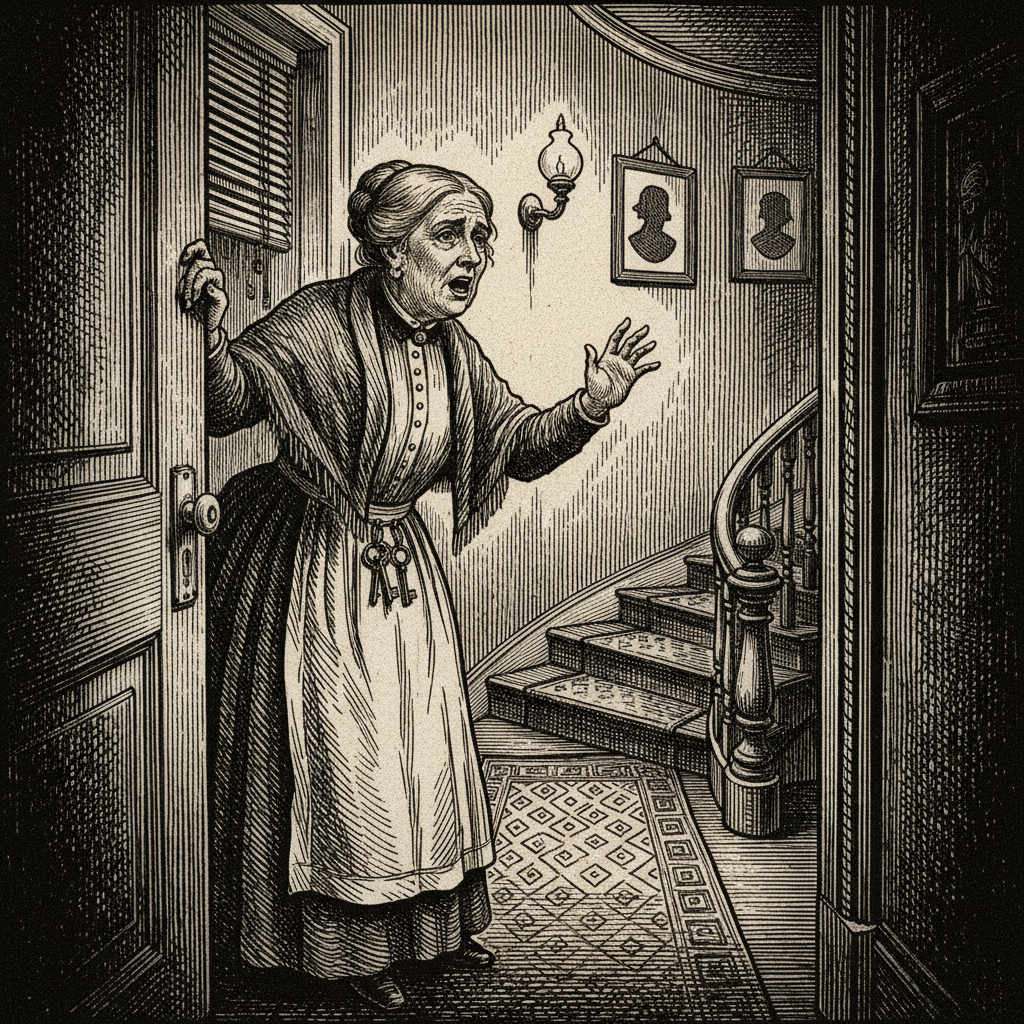
I run now, though running inside one's own mind is paradox. Doors open onto doors open onto doors. I see Watson trying to revive me, his honest face twisted in panic. I see Mrs. Hudson calling for help. I see Lestrade arriving, too late, always too late.
But wait. Look. The mind palace is not even a palace anymore. Gone. Collapsed. Nothing but meat now. Wet, electric meat. This is just my brain doing its death-thing. Each brain cell shooting its final fuck-you firework. Synapses popping off. Little cellular goodbyes. Each one desperate. Pointless. The cocaine, the morphine, the nicotine... I've been dying for years, slowly murdering the machine that houses me.
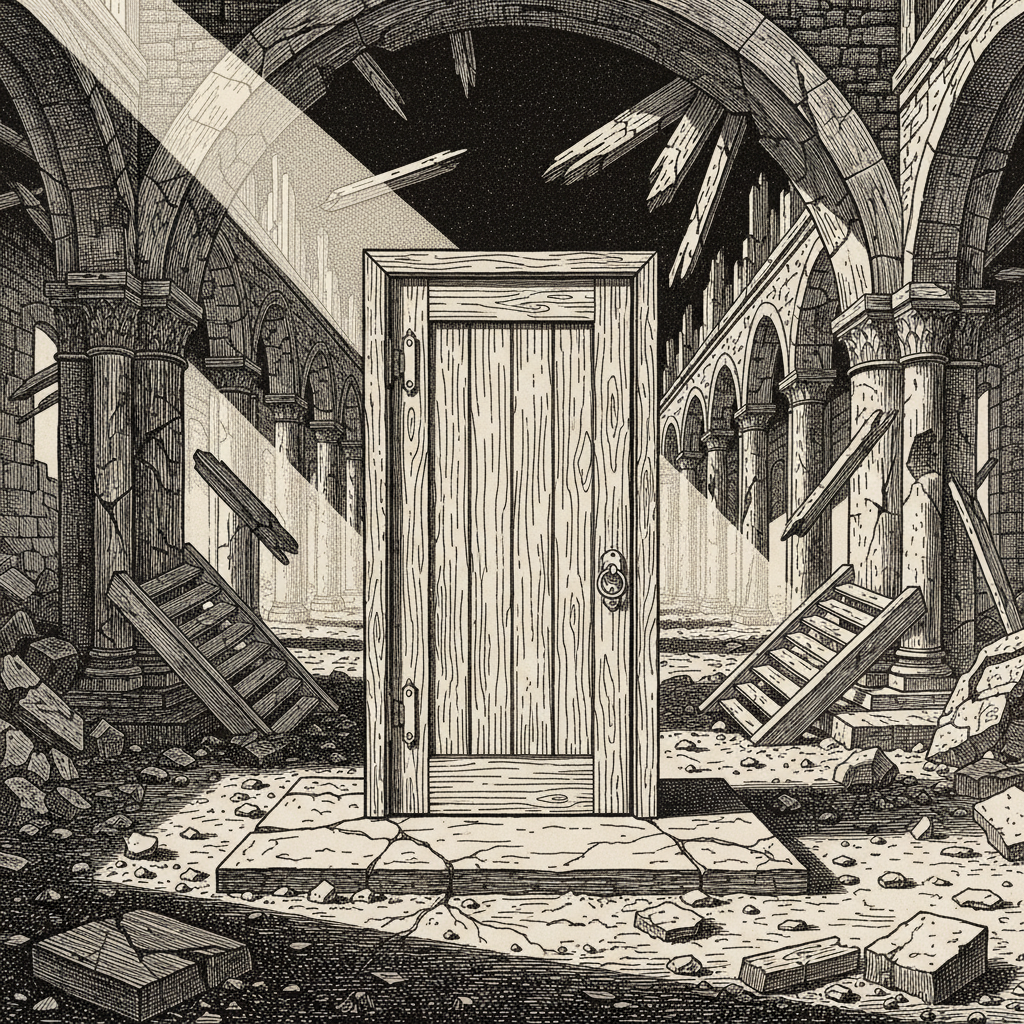
A final door appears. Unmarked. Simple wood, like the door to my childhood home in Yorkshire. I know with absolute certainty that beyond it lies either death or waking. Perhaps they are identical.
I deduce: if consciousness is illusion, then death is merely the cessation of a lie. If the self is real, then I die regardless, poisoned by my own hubris, my need to escape the prison of being Sherlock Holmes.
The doorknob turns easily.
Beyond... nothing. Everything. The truth that mind seeks itself in infinite recursion, that self is both the observer and the observed, the detective and the criminal, the question and the answer. I am the riddle and the riddler, the trap and its maker.
Watson's voice, distant: "He's gone."
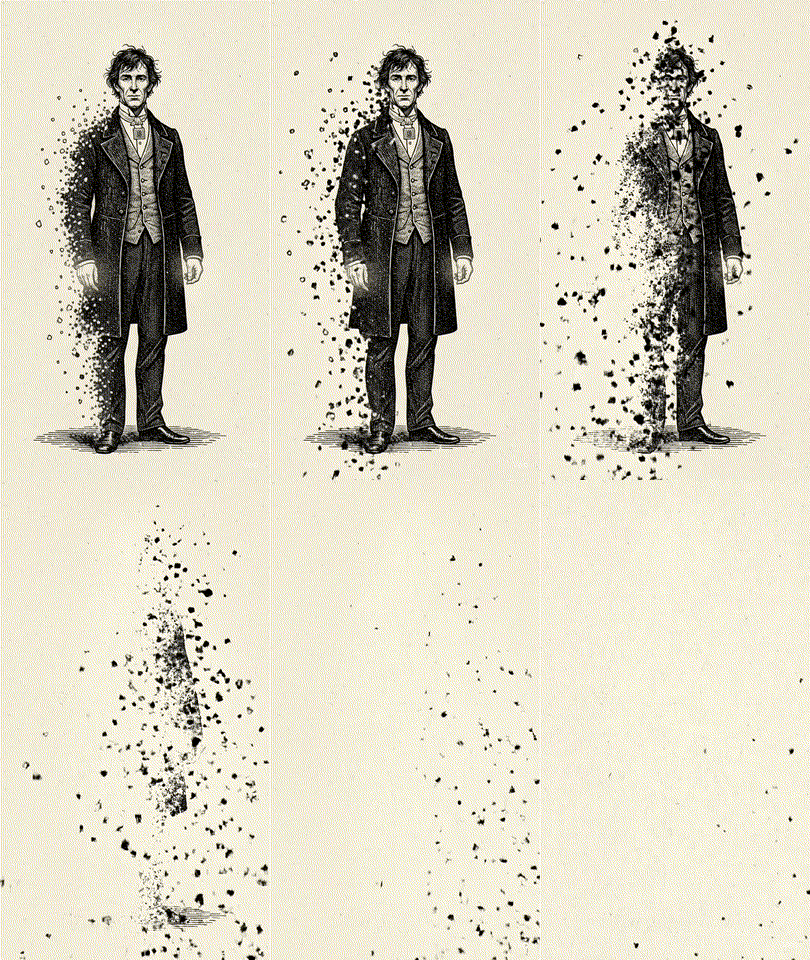
But I remain, suspended in this moment of revelation, understanding finally that the greatest mystery was never about who or how or why, but about the impossible fact that anything exists to question its own existence. The nicotine stops my heart, but I've already vanished, dissolved into the very mystery I sought to solve.
The mind palace collapses. I am everywhere. Nowhere.
Free.